

Basic and Translational Cancer Research
The Markopoulos Laboratory is a newly established unit of basic and translational cancer research with a central focus on flow cytometry and its applications in physiology, hematology and oncology. The unit studies tumor biology, phenotypic biomarkers, immune-cell profiling, and translational laboratory approaches that connect experimental research with clinically relevant questions.
Particular emphasis is placed on systematic tumor phenotyping and biomarker discovery, anticancer agent mechanism of action and intraoperative flow cytometry for rapid cellular analysis for cancer characterization and resection margin assessment. The laboratory also maintains a broader interest in hematologic applications of cytometry and in physiology-linked undergraduate teaching.

Georgios S. Markopoulos
Assistant Professor
Georgios S. Markopoulos is Assistant Professor in the Laboratory of Physiology, Department of Medicine, University of Ioannina. His research focuses on flow cytometry, cancer biology, and translational oncology, with work spanning tumor phenotyping, intraoperative cytometry, biomarker analysis, and laboratory applications at the interface of oncology, hematology, and physiology.
His recent scientific activity reflects an emphasis on cytometry-driven cancer research, including phenotypic cell assessment, intraoperative flow cytometry in surgical oncology, applications of flow cytometry and clinically oriented biomarker studies. At the same time, his academic profile includes teaching the physiology of blood and flow cytometry applications for basic and translational research and for the diagnosis of hematologic malignancies.
Research Directions
Flow Cytometry
Applications of flow cytometry in physiology, hematology, oncology and translational laboratory research.
Tumor Biology
Study of tumor phenotyping, cancer-cell characterization and mechanisms related to tumor progression.
Biomarker Discovery
Phenotypic biomarkers, immune-cell profiling and clinically oriented biomarker studies.
Intraoperative Cytometry
Rapid cellular analysis for cancer characterization and resection margin assessment in surgical oncology.
Selected Publications
Beyond Iron: The Roles of CD71 in the Pathophysiology of Cancer. J Clin Med, 2025.
Could Flow Cytometry Provide New Prognostic Markers in Colorectal Cancer? J Clin Med, 2024.
Intraoperative Flow Cytometry for the Rapid Diagnosis and Validation of Surgical Clearance of Non-Melanoma Skin Cancer. Cancers, 2024.
Imaging Flow Cytometry: Development, Present Applications, and Future Challenges. Methods Protoc, 2024.
Neutrophil Extracellular Traps and Pancreatic Cancer Development: A Vicious Cycle. Cancers, 2022.
Current Team
Discover the researchers of the Laboratory
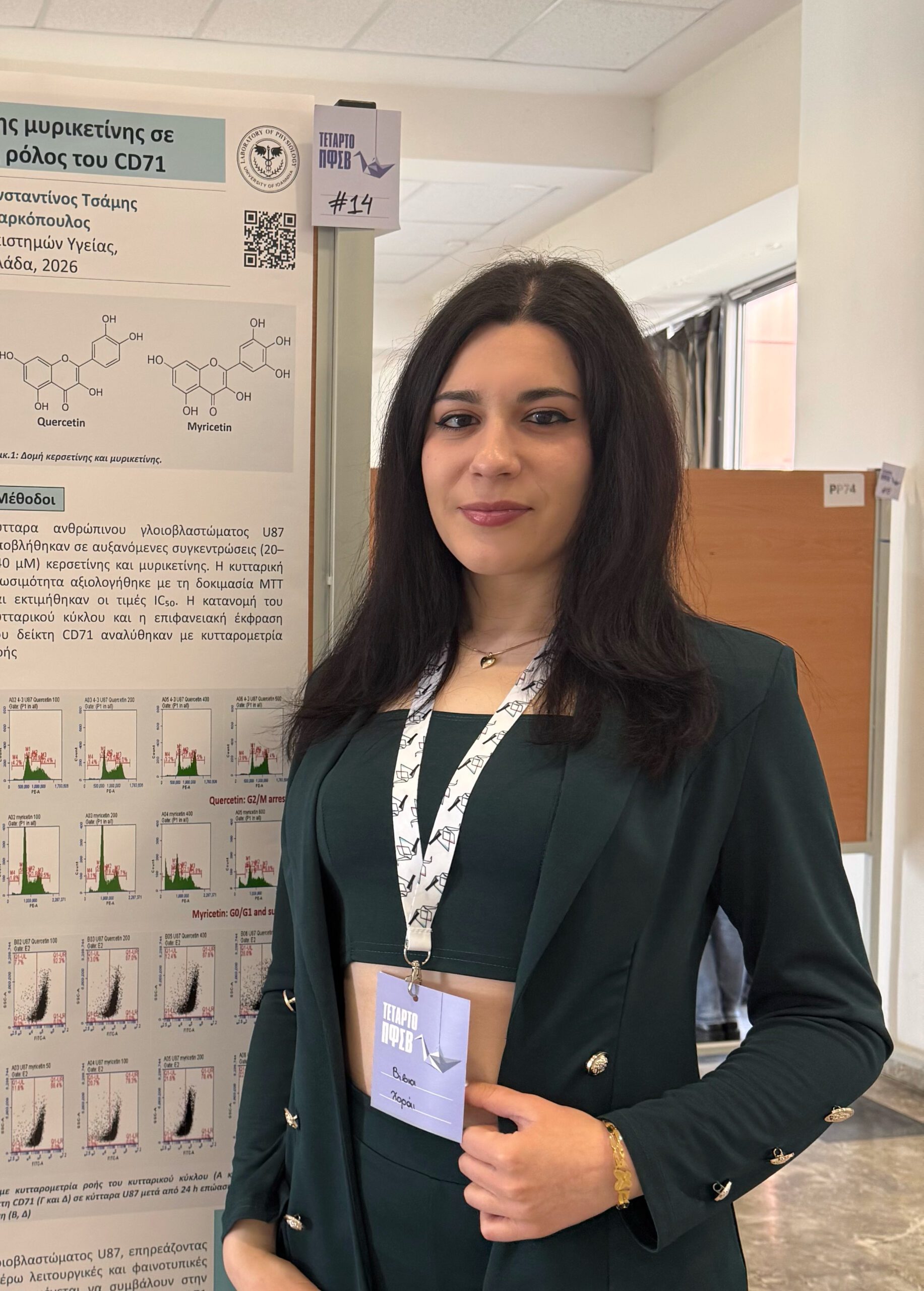
Vivia Horaj
Undergraduate StudentVivia Horaj is an undergraduate student in the Department of Biological Applications and Technologies at the University of Ioannina. She is currently conducting her thesis at the Department of Medicine, where her work is centered on advancing the understanding of cancer biology. Particularly, her focus is the anticancer role of myricetin on glioblastoma cells and the potential role of CD71.
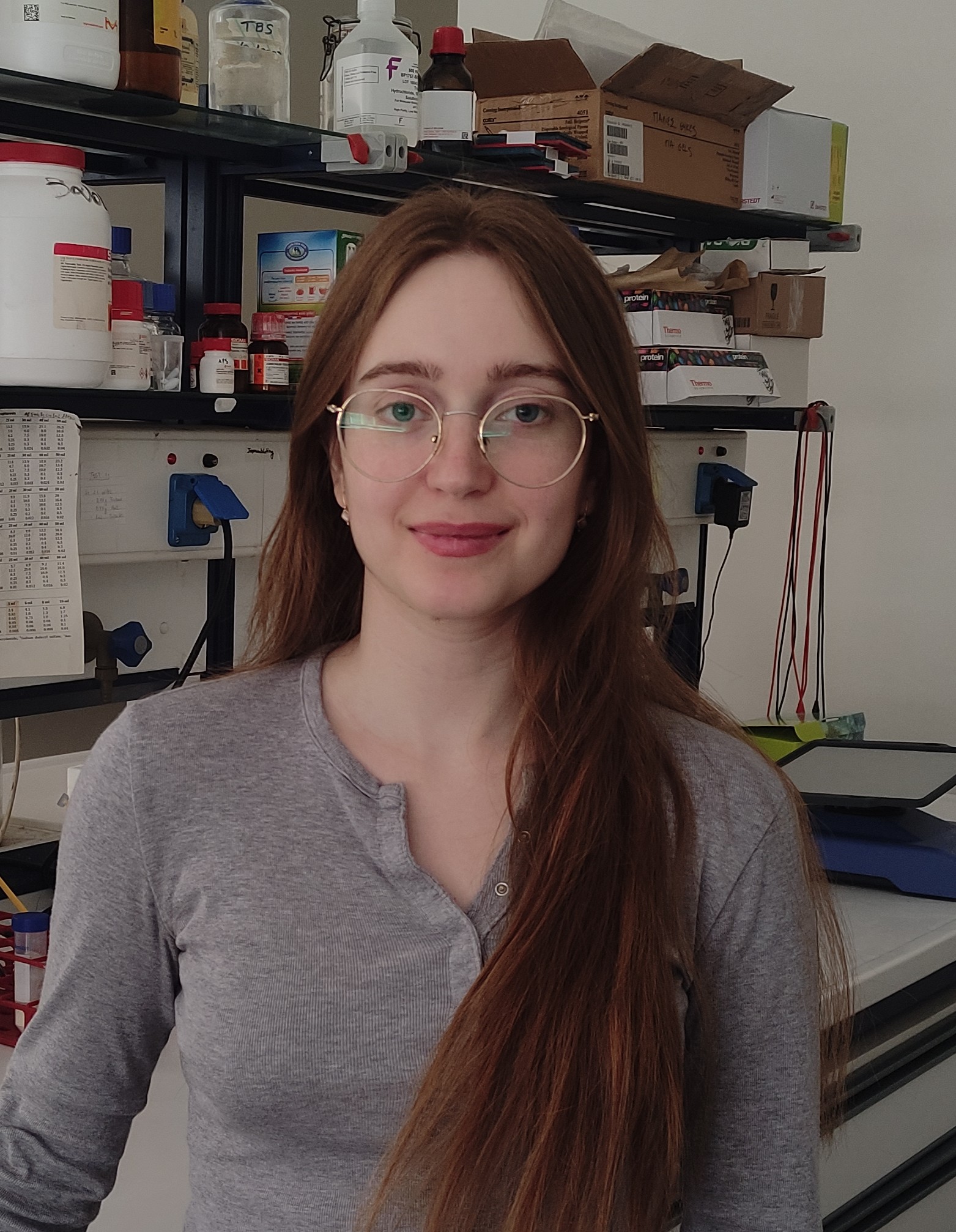
Christina Tsialiou
Undergraduate StudentChristina Tsialiou is an undergraduate student in the Department of Biological Applications and Technologies of the University of Ioannina. For the last one year she has been conducting research for her undergraduate thesis at the Physiology Laboratory. Her research focuses on the anticancer activities of Quercetin, a natural flavonoid substance found in plants, specifically on glioblastoma and the potential role of the phenotypic marker CD71 as a possible therapeutic target.
Vivia Horaj
Undergraduate Student
Vivia Horaj is an undergraduate student in the Department of Biological Applications and Technologies at the University of Ioannina. She is currently conducting her master’s thesis at the Department of Medicine, where her work is centered on advancing the understanding of cancer biology. Particularly, her focus is the anticancer role of myricetin on glioblastoma cells and the potential role of CD71.
Christina Tsialiou
Undergraduate Student
Christina Tsialiou is an undergraduate student in the Department of Biological Applications and Technologies of the University of Ioannina. For the last one year she has been conducting research for her undergraduate thesis at the Physiology Laboratory. Her research focuses on the anticancer activities of Quercetin, a natural flavonoid substance found in plants, specifically on glioblastoma and the potential role of the phenotypic marker CD71 as a possible therapeutic target.